
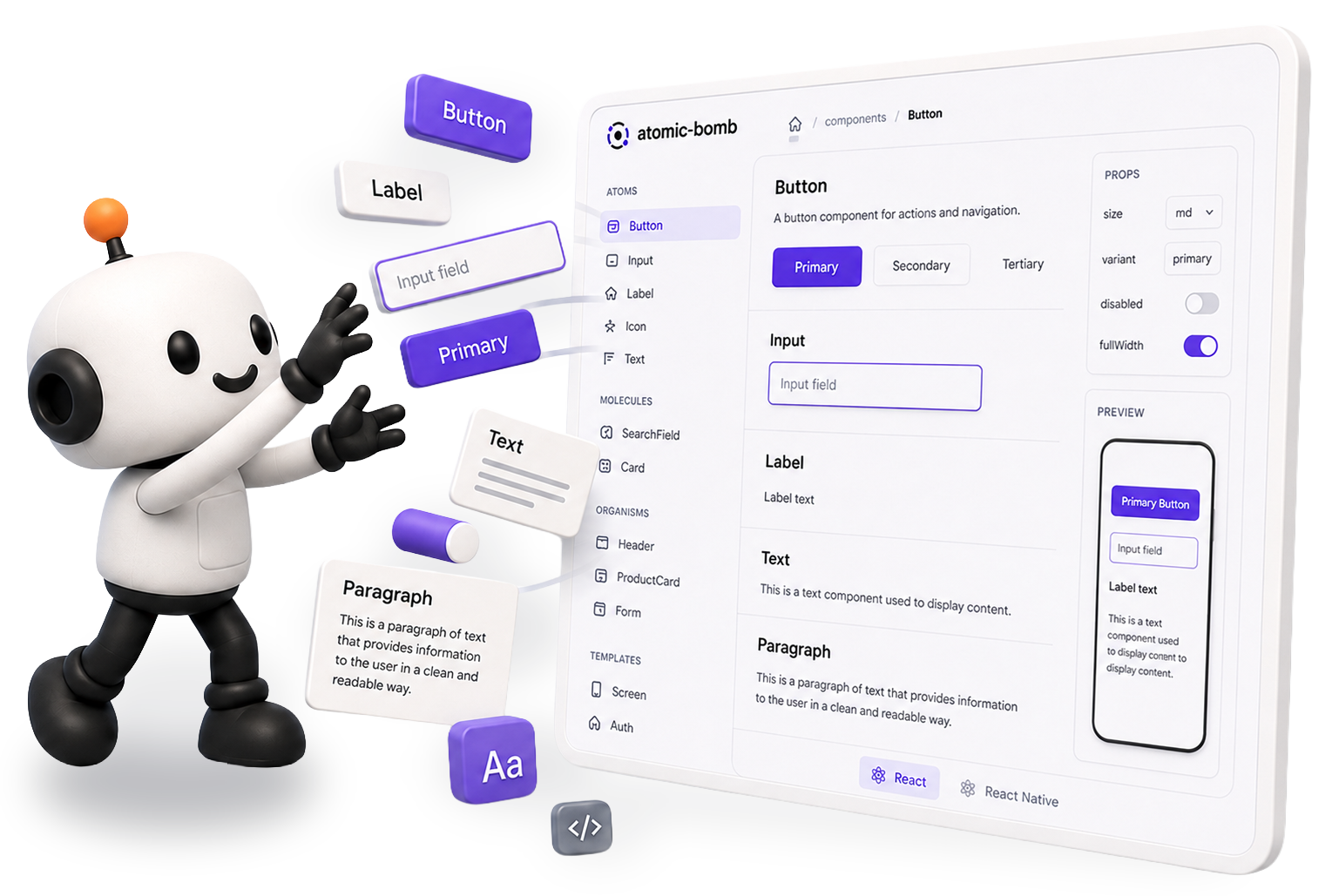
Atomic Bomb helps you implement the Atomic Design principle in your React and React Native projects with an intuitive CLI, powerful generators and a consistent project structure.
Atomic Design
Organize you UI into Atoms, Molecules, Organisms, Templates and Pages.
Powerful CLI
Generate components, folders and files with our intuitive CLI.
Consistent Structure
Follow best practices with a consistent and scalable project structure.
React, NextJS & React Native
Build cross-platform applications with the same design system.
Atomic Design + Domain-Driven Design for React, React Native and Next.js
Atomic Design is a methodology envisioned by Brad Frost for creating design systems and user interfaces by breaking them down into smaller, reusable components. It consists of five distinct levels: Atoms, Molecules, Organisms, Templates, and Pages. Each level builds upon the previous one, creating a clear hierarchy that promotes consistency, reusability, and maintainability across applications.
Atoms are the basic building blocks of the interface, such as buttons, inputs, and icons. Molecules are combinations of atoms that form more complex components like form fields or navigation items. Organisms are groups of molecules that create distinct sections of an interface, such as headers or product listings. Templates define the overall layout and structure of a page without specific content, while Pages are instances of templates filled with real content.
By following the Atomic Design principles, developers can create scalable and maintainable front-end architectures that promote consistency across projects and teams.
This approach reduces duplication, improves collaboration between designers and developers, and allows for faster development cycles as applications grow in complexity.
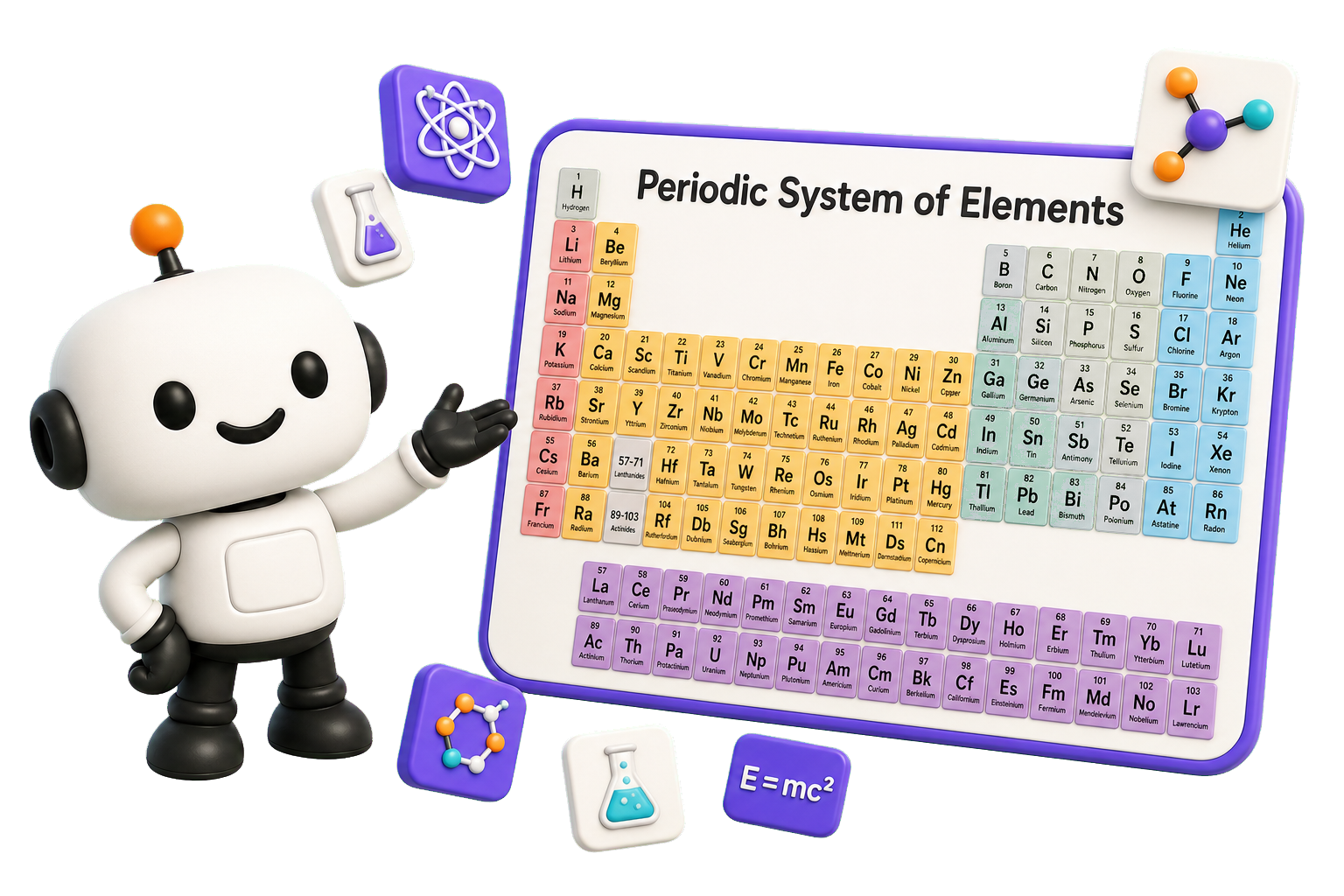
Atomic Toolkit
Based upon the ideas of Brad Frost, I designed and build this toolkit which enables me to build structured, maintainable and reusable components for websites, mobile apps and even Tauri desktop apps.
The Atomic Toolkit provides a complete workflow for designing, structuring, and developing scalable front-end applications based on the principles of Atomic Design and modern software architecture.
Atomic Resources forms the foundation of the toolkit by centralizing design tokens, color palettes, typography, spacing systems, icons, and other reusable assets. This creates a single source of truth that ensures visual consistency across teams, applications, and platforms. By defining these resources upfront, organizations can establish a maintainable design system that evolves alongside their products.
Building on this foundation, Atomic Bomb generates the architectural structure of your application using the Atomic Design methodology. Components are organized into Atoms, Molecules, Organisms, Templates, and Pages, creating a clear and predictable hierarchy. This approach encourages reusability, improves maintainability, and helps teams scale applications without creating unnecessary complexity. Every component has a defined role, making codebases easier to understand and navigate.
To complete the workflow, Bomber MCP brings architecture directly into the development process. By automatically generating components, domains, hooks, services, and supporting files according to established conventions, Bomber MCP eliminates repetitive setup work and ensures consistency throughout the project. Developers can focus on solving business problems while the tooling maintains architectural standards.
Together, Atomic Resources, Atomic Bomb, and Bomber MCP create a unified ecosystem that transforms design systems into working software faster, with greater consistency, higher quality, and significantly reduced technical debt.

Atomic Resources
Generate and manage design tokens, web Sass resources, native style modules, fonts, themes, assets, and configuration files that form the visual foundation of an Atomic Design-based React or React Native application.

Atomic Bomb
Generates and enforce an Atomic Design-based project structure by creating Atoms, Molecules, Organisms, Templates, and Pages, along with their associated components, stories, tests, styles, and exports.

Bomber
Provides AI-driven code generation and project automation through the Model Context Protocol, enabling agents to create, modify, and maintain Atomic Design-compliant components, features, hooks, domains, and application structures.
Build Scalable Front-Ends with Atomic Bomb
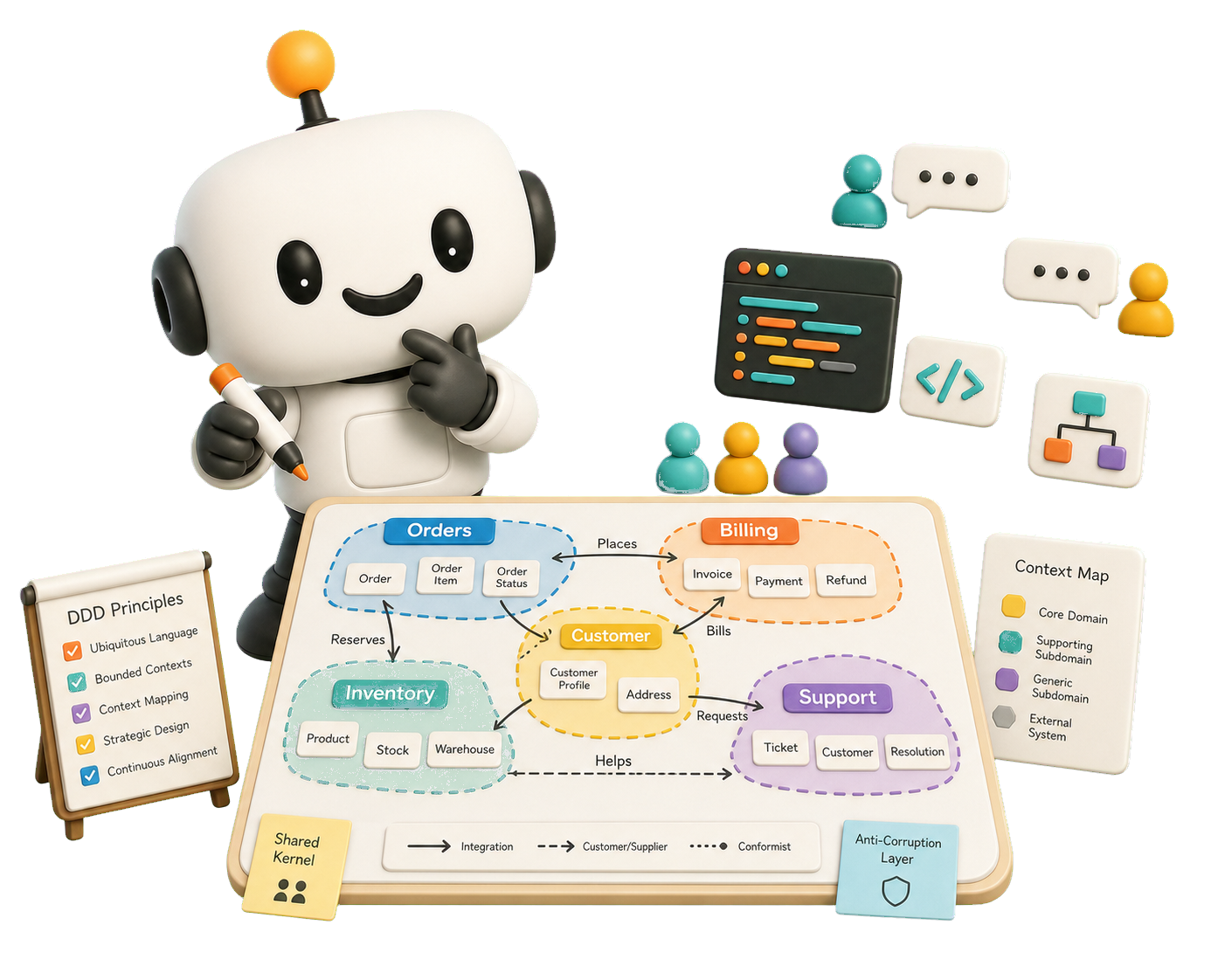
Modern applications require more than great-looking interfaces-they require architecture that can grow with the business. Atomic Bomb combines the principles of Atomic Design and Domain-Driven Design (DDD) to help development teams create scalable, maintainable, and reusable front-end applications.
Using Atomic Design, user interfaces are built from small, reusable building blocks such as atoms, molecules, and organisms. This creates consistency across applications and prevents the duplication that often leads to technical debt. Domain-Driven Design complements this approach by organizing software around business domains and bounded contexts, ensuring that technical implementation remains aligned with real business needs.
By connecting reusable UI components with domain-oriented application structures, Atomic Bomb helps organizations build products that are easier to maintain, easier to extend, and easier for teams to understand. The result is faster development, improved consistency, and a front-end architecture that remains manageable as applications grow.
Using TypeScript Barrels and Platform Styling
Atomic Bomb uses TypeScript barrels and platform-specific styling resources to keep projects organized, scalable, and easy to maintain.
TypeScript barrels (
Web projects can use Sass barrels (


AI-Powered Front-End Architecture, Built In
Atomic Bomb goes beyond simple code generation.
Its integrated AI understands Atomic Design, Domain-Driven Design (DDD), project conventions, and reusable component patterns to generate complete, production-ready front-end structures.
Instead of creating a single component, Atomic Bomb analyzes your request, identifies reusable atoms, molecules, and organisms, and scaffolds the entire architecture required to support the feature.
The AI automatically determines component relationships, TypeScript contracts, domain structures, hooks, services, state management, stories, tests, mocks, and barrel exports.
Using configurable skill files, the AI follows your team's architectural standards and coding conventions, ensuring consistent, scalable, and maintainable code across projects.
Whether you're generating a simple button, a complex data table, or an entire feature page, Atomic Bomb transforms high-level requirements into structured React applications that align with modern engineering best practices. The result is faster development, reduced boilerplate, and a predictable front-end architecture that remains consistent as your application grows.